
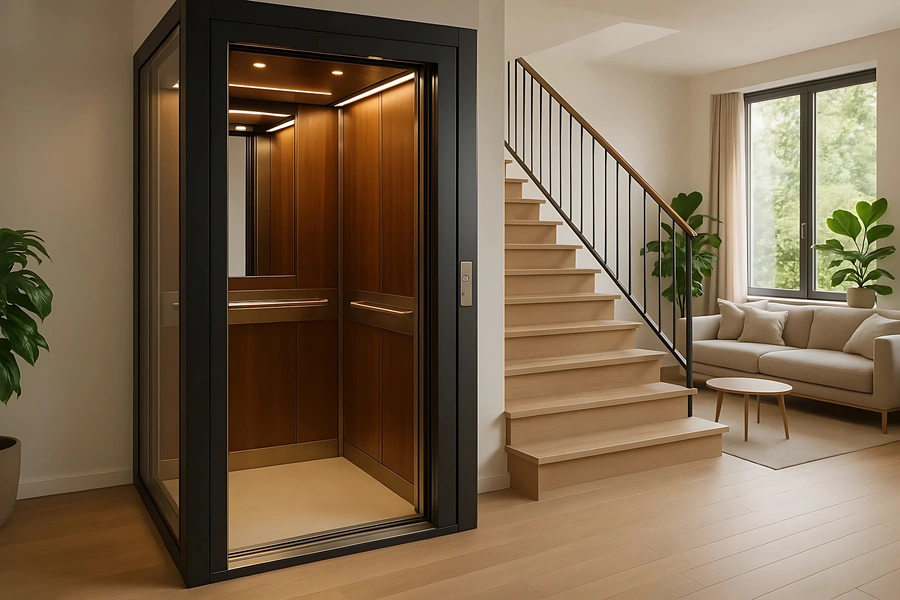
Installing a home lift is about more than choosing the right model. Where the lift is positioned can have just as much impact on how practical, comfortable and convenient it is to use every day.
The best location will vary from one property to another. Factors such as the layout of the house, available space, structural considerations and how the lift will be used all influence the final decision. Taking the time to plan the location carefully can help avoid unnecessary alterations while ensuring the lift works well for years to come.
Start with how you move around your home
Before deciding where a lift should go, think about how the property is used daily.
A lift should make moving between floors as simple as possible. Installing it in an area that connects the main living spaces is often more practical than placing it in a location that requires additional walking or an awkward route through the house.
For example, if the kitchen, living room and main entrance are all on the ground floor, with bedrooms upstairs, positioning the lift close to these regularly used areas may provide the greatest benefit.
The aim is to make the lift feel like a natural part of the home rather than an addition that is difficult to access.
Consider the available space
Every property has different space constraints, so there is no single location that suits every home.
Some properties have enough room for a lift within an existing hallway or landing, while others may require a section of a room to be adapted. In larger homes, there may be opportunities to create a dedicated lift space that links several floors without affecting the overall layout.
Modern home lifts are available in a range of sizes, and many are designed specifically for properties with limited space. A professional survey will help identify which locations are both practical and structurally suitable.
Think about future accessibility
Many homeowners install a lift with the future in mind, even if they do not currently have mobility concerns.
If that is the case, it makes sense to position the lift so it continues to provide easy access as needs change. This could mean ensuring it reaches the main bedroom, bathroom, and primary living areas, reducing the need to use stairs over time.
Planning ahead now can make the property more comfortable and practical for many years.
Existing homes versus new builds
The best location can also depend on whether the lift is being installed in an existing property or included as part of a new build.
In an existing home, the position will usually be influenced by the current layout and any structural limitations. The aim is often to achieve the best result with as little disruption as possible.
New builds offer greater flexibility, allowing the lift to be incorporated into the design from the beginning. This can make it easier to position the lift centrally and ensure it works seamlessly with the rest of the property.
Don’t overlook the structural requirements
Although many modern home lifts require less building work than people expect, every installation still needs careful planning.
Floor construction, ceiling heights, available floor space and access between levels all need to be assessed before deciding on a location. Some positions may appear suitable at first but require more extensive structural work than others.
A professional assessment helps identify the most practical option while ensuring the installation can be completed safely and efficiently.
Think about everyday convenience
A home lift should fit naturally into everyday life.
Consider how often it will be used, who will use it, and whether it needs to accommodate shopping, luggage, laundry, mobility equipment, and passengers.
A lift positioned close to the main entrance, garage or utility area may make daily tasks easier. At the same time, one located near the centre of the home may provide better overall access between floors.
The best location is often the one that complements how the household already moves around the property.
Balancing practicality with appearance
Many homeowners are understandably concerned about how a lift will affect their home’s appearance.
Modern residential lifts are available in a variety of finishes and designs, allowing them to blend into both contemporary and traditional properties. Careful positioning can also help minimise the visual impact while maintaining easy access.
Rather than hiding the lift completely, the goal is usually to integrate it so that it feels like a considered part of the home’s design.
Why a professional survey is essential
No two homes are the same, which is why there is rarely a simple answer to where a lift should be installed.
A professional survey considers the property’s layout, structure, available space and the homeowner’s current and future requirements. This allows suitable locations to be identified before any work begins and helps avoid costly changes later in the project.
Receiving expert advice early in the planning process makes it much easier to choose a location that offers the best balance of practicality, accessibility and long-term value.
Finding the right location for your home
The best place to install a home lift is one that works with how you live. Easy access between frequently used rooms, suitable structural conditions and future accessibility should all play a part in the decision.
Every property presents different opportunities, so taking the time to assess the available options before installation can make a significant difference. With careful planning and professional guidance, a home lift can become a practical feature that enhances everyday living without compromising the property’s character or layout.