
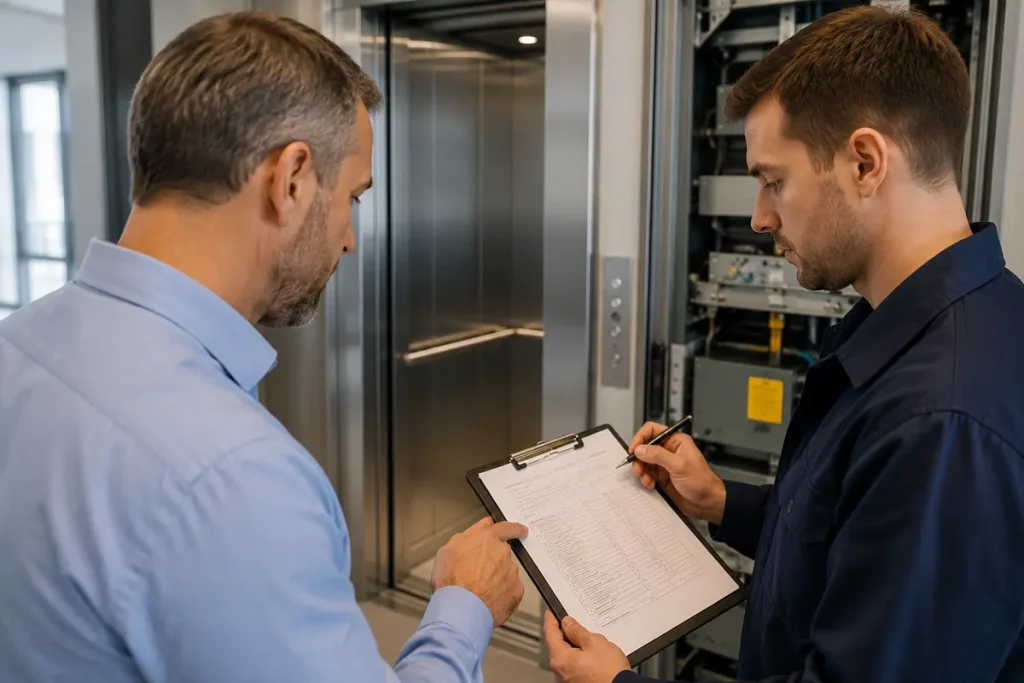
Choosing a lift maintenance provider is not simply a matter of comparing prices. The scope of an agreement can vary considerably between providers, and understanding exactly what is included helps avoid unexpected costs, misunderstandings and unnecessary disruption later.
A well-structured maintenance contract should clearly explain the services being provided, the level of support available and the responsibilities of both the maintenance company and the building owner or duty holder.
Reviewing these details before entering into an agreement makes it easier to compare providers on the quality of service rather than cost alone.
Planned Maintenance Visits
At the heart of every maintenance agreement is a programme of planned servicing.
The frequency of maintenance visits should reflect how the lift is used rather than following a standard schedule. A passenger lift serving a busy office building or healthcare facility is likely to require more frequent attention than one in a lightly occupied commercial property.
The agreement should state how often engineers will attend, what checks and servicing tasks are carried out during each visit and whether the maintenance schedule can be reviewed if the demands on the lift change over time.
Response Times for Breakdowns
No lift operates without the possibility of faults developing, regardless of how well it is maintained.
A maintenance contract should explain how quickly breakdowns will be attended and whether different response times apply depending on the urgency of the fault.
For buildings where lifts are essential to accessibility or day-to-day operation, response times can form an important part of the agreement and should be understood before the contract begins.
Emergency Call-Out Arrangements
It is important to understand what happens outside normal working hours.
Many maintenance providers offer emergency call-out services, but the level of cover can vary. Some agreements include 24-hour emergency attendance, while others provide support only during specified hours or charge separately for out-of-hours call-outs.
The contract should make these arrangements clear so there is no uncertainty if an emergency occurs.
Breakdown Cover
Breakdown cover should explain what happens when a lift develops a fault and whether attendance, labour and follow-up visits are included within the agreement.
Some contracts include breakdown attendance but charge separately for repairs or replacement components. Others may limit the number of call-outs or exclude faults caused by misuse, vandalism, water damage or other external factors.
These conditions should be set out clearly so building managers understand where routine cover ends and additional costs may begin.
Parts, Labour and Exclusions
Not every maintenance agreement includes the same level of cover.
Routine servicing is normally included, but replacement parts, major repairs, consumable items and specialist testing may be treated separately. Some agreements include selected components, while others provide labour-only cover.
Understanding exclusions before signing the agreement helps prevent unexpected costs when faults develop.
Any limitations relating to parts, labour, call-outs or particular components should be clearly explained rather than hidden within the small print.
Are LOLER Examinations Included?
Routine maintenance and LOLER thorough examinations are separate activities.
Some maintenance providers can arrange statutory examinations as part of their overall service, while others require these to be organised independently.
The contract should state whether LOLER examinations are included, who will carry them out, how they are arranged and whether the cost forms part of the maintenance agreement.
Building managers should also check how defects identified during a thorough examination will be reported and how any remedial work will be handled.
Planned Maintenance Schedules
A maintenance schedule should be based on the type of lift, its age, condition, level of use and operating environment.
A standard visit frequency may not be suitable for every building. Lifts in healthcare facilities, apartment developments, offices, hotels or industrial premises can all be subject to different levels of demand.
The agreement should allow the maintenance schedule to be reviewed if usage increases, recurring faults develop or the condition of the lift begins to change.
Maintenance Reports and Recommendations
Every maintenance visit should leave a clear record of what has been inspected, any work carried out and any concerns identified.
These reports help building managers understand the condition of their lift systems and provide useful information when planning repairs or future expenditure.
Recommendations should be explained clearly, particularly where work is being advised because of developing wear, ageing components or safety concerns.
A report should make it clear whether a recommendation is urgent, should be planned within a stated period or is simply something that needs to be monitored.
Communication and Authorisation
A good maintenance agreement is about more than scheduled visits.
Building managers should know who to contact when faults occur, how repairs will be authorised and how recommendations will be communicated.
The agreement should also explain whether quotations are required before repairs can proceed, who is permitted to approve work and how emergency decisions will be handled outside normal working hours.
Clear communication helps prevent delays and reduces the risk of repairs being held up because responsibilities have not been agreed in advance.
Keeping Accurate Maintenance Records
Maintenance records are an important part of managing lift systems throughout their working life.
A maintenance agreement should support good record keeping by providing reports for every visit, documenting repairs and identifying outstanding recommendations where further work is required.
These records become increasingly valuable as lifts age, helping identify recurring faults, monitor reliability and support future maintenance decisions.
Building managers should also check how reports are supplied and whether records can be accessed easily if the maintenance provider changes.
Reviewing the Condition of the Lift
Maintenance is not only about responding when something fails.
As lift systems age, the maintenance provider should help building managers understand how the condition of the equipment is changing over time.
Recurring faults, obsolete components or increasing repair requirements may indicate that a planned programme of modernisation should be considered. Having these discussions early allows work to be budgeted and planned rather than forced by an unexpected failure.
Looking Beyond Price
Cost is naturally an important consideration when comparing maintenance agreements, but it should not be the only one.
The level of cover, response times, quality of reporting, communication and long-term support all influence how effectively a lift is maintained throughout its working life.
A lower-priced agreement may appear attractive initially, but if important services are excluded or response times are limited, the overall cost of managing the lift may be higher over time.
Understanding exactly what is included allows building managers to compare agreements on value as well as price.
Choosing the Right Maintenance Agreement
Every building has different maintenance requirements, and the most suitable agreement should reflect how the lift is used, the age and condition of the equipment and the operational needs of the building.
Taking time to review what is included, ask questions about exclusions and understand how the maintenance provider supports its customers can help avoid problems later.
If you are reviewing your current maintenance arrangements, understanding what is included is just as important as comparing price.
Frequently Asked Questions
How often should planned lift maintenance visits take place?
There is no single maintenance interval that applies to every lift. The frequency should reflect the type of lift, its age, usage levels, condition and the environment in which it operates.
Does every lift maintenance contract include emergency call-outs?
No. Emergency attendance varies between providers, so it is important to check what level of cover is included and whether additional charges apply outside normal working hours.
Are replacement parts usually included within a lift maintenance contract?
Not always. Some agreements include selected components, while others cover labour only. The contract should clearly explain which parts are included, any exclusions and when additional charges may apply.
Is a LOLER examination the same as routine lift maintenance?
No. A LOLER thorough examination is a separate statutory assessment and should not be confused with routine maintenance or servicing.
Can a lift maintenance contract be reviewed if the building’s needs change?
Yes. If lift usage changes significantly, recurring faults develop or the equipment begins to age, the agreement should be reviewed to make sure it still meets the needs of the building.
Should breakdown attendance and repairs be treated as the same thing?
No. A contract may include attendance to diagnose a fault without including the labour, parts or follow-up work needed to complete the repair. The agreement should explain the difference clearly.
Why should maintenance providers not be compared on price alone?
Response times, exclusions, reporting, communication and the level of breakdown support can vary considerably. Understanding the full scope of the agreement provides a much clearer basis for comparison than price alone.