

Frequently Asked questions
What types of lifts can you remove?
We remove all types of lifts, including passenger lifts, platform lifts, dumbwaiters, goods lifts, traction and hydraulic lifts, and older lift systems.
Is lift removal safe in an occupied building?
Yes. We take all necessary safety precautions to ensure minimal disruption and risk to occupants. Work areas are clearly segregated, and noise and dust are managed responsibly.
What does decommissioning a lift involve?
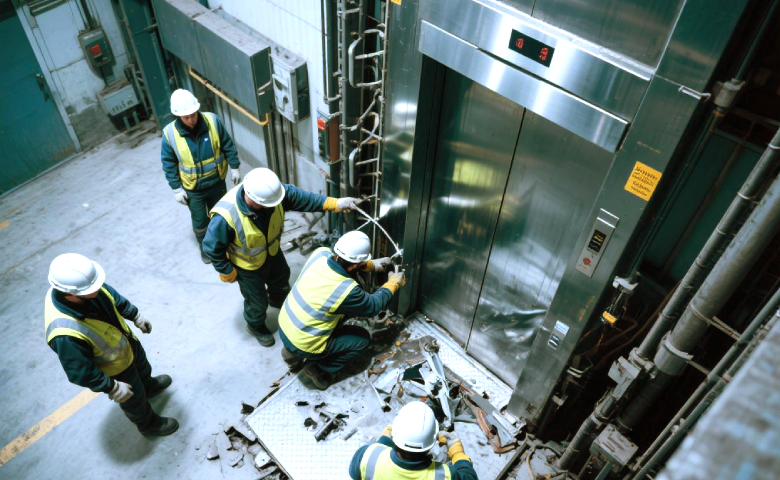
Lift decommissioning involves electrically and mechanically isolating the lift, draining hydraulic systems (if applicable), and preparing it for safe dismantling in line with regulations.
Do you remove lift shafts as well?
We remove all lift components from within the shaft. However, the structural removal of the shaft itself is usually handled by building contractors or structural engineers.
Can you remove lifts in high-rise or restricted access buildings?
Yes. Our engineers are experienced in removing lifts from challenging locations, including confined shafts, rooftop plant rooms, and high-rise buildings with limited access.
What happens to the old lift components?
Where possible, lift parts are dismantled and recycled. Non-recyclable or hazardous materials are disposed of responsibly, and waste transfer documentation is provided.
Do I need permission to remove a lift?
In most cases, building owner or landlord approval is required. In listed or protected buildings, additional consent may be needed. We can advise during the planning phase.
Can you help if my lift is no longer compliant?
Yes. If your lift is outdated, unsafe, or has failed a compliance inspection, we can remove it and assist with planning a suitable replacement if required.
How long does it take to remove a lift?
Timeframes vary depending on the lift type, location, and building layout. A typical removal can take anywhere from a single day to several days for complex installations.
Do you provide documentation after the removal is complete?
Yes. We provide a full handover report including method statements, disposal certificates, and confirmation of works completed to health and safety standards.