Home Lifts for Ribble Valley Homes
Houses in the Ribble Valley are rarely standard. A stone terrace in Clitheroe, a farmhouse outside Waddington and a barn conversion near Ribchester all throw up different problems when it comes to fitting a lift.
We supply and install home lifts across the valley, working from our base in Darwen, about half an hour away. Every job starts with a visit to the house, because the right lift depends on the building as much as the person using it.
Thinking about a lift for your home in the Ribble Valley? We’ll come out, measure up and tell you honestly what will fit. Call 01254 775187 or book a home survey.
Stone Terraces in Clitheroe, Whalley and Longridge
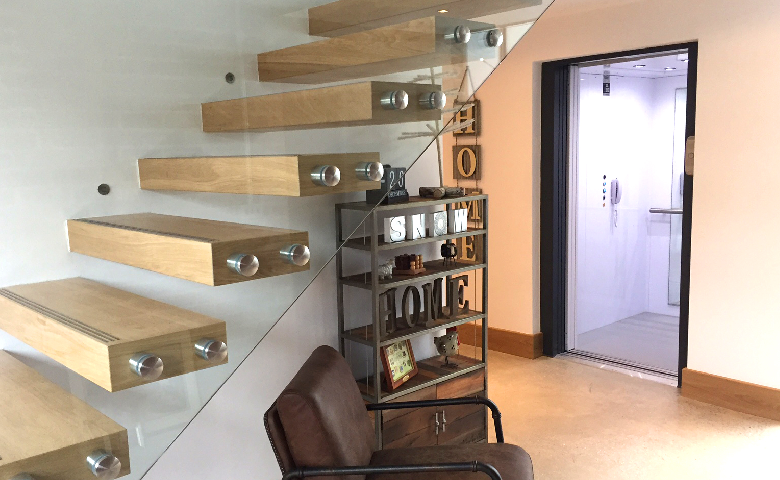
Older stone terraces have solid walls, narrow stairs and not much spare floor space. That usually rules out anything that needs its own shaft built into the house. A compact through-floor lift, rising from a corner of the front room into a bedroom above, is often the most practical answer. The main work is cutting a neat opening in the floor between the two rooms, with the lift’s own safety edges and a trap that closes the gap when the car isn’t there.
Farmhouses and Barn Conversions
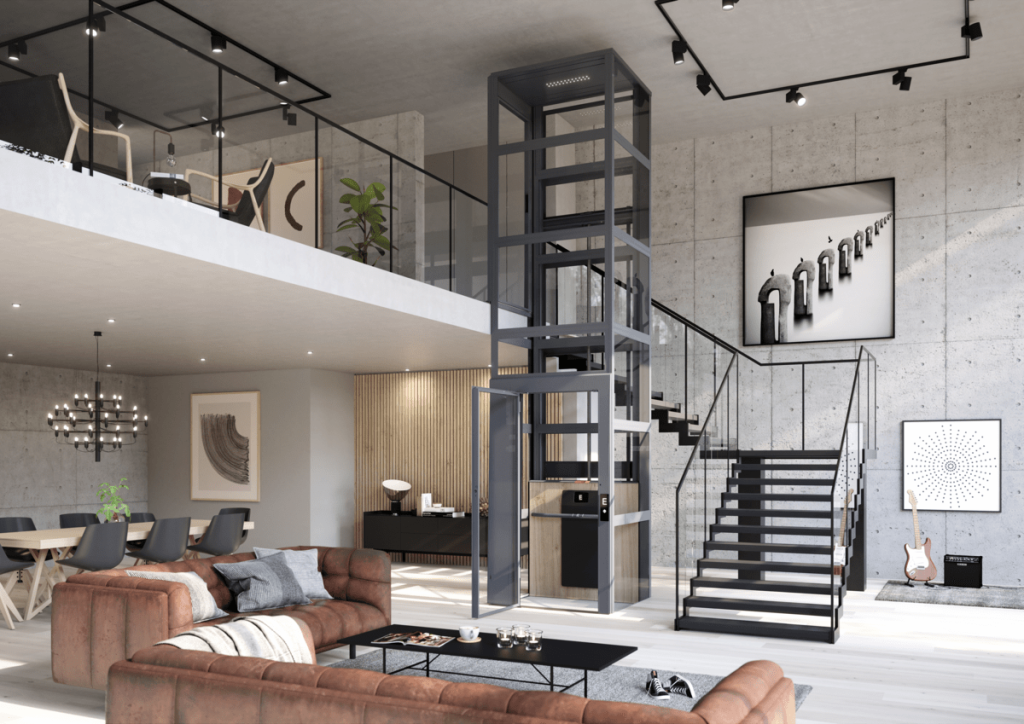
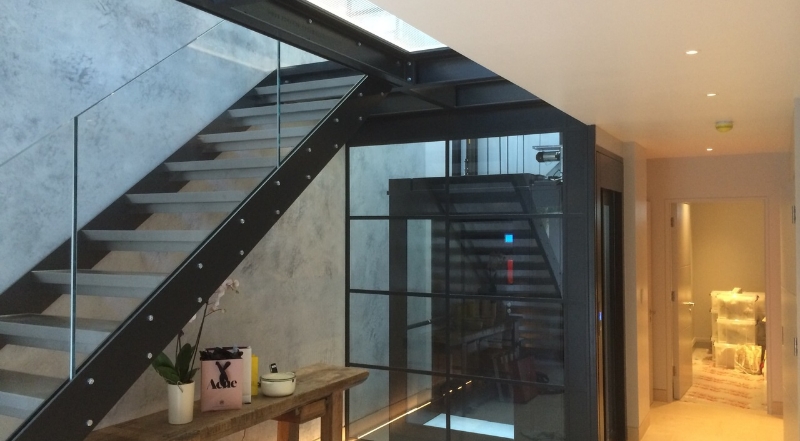
Older rural properties bring their own surprises: oak beams exactly where the lift wants to go, floors at slightly different levels and walls a couple of feet thick. Barn conversions often have lofty open rooms that suit a glazed platform lift, but the structure above has to be checked first. We look at the beams and joists at the survey and tell you if a structural engineer needs to be involved before you commit to anything.
Home Lift Options
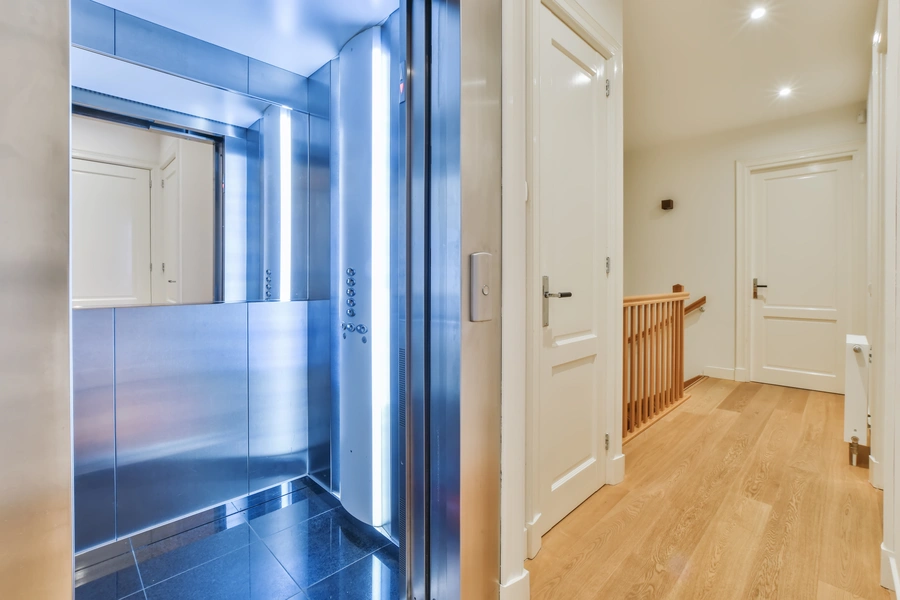
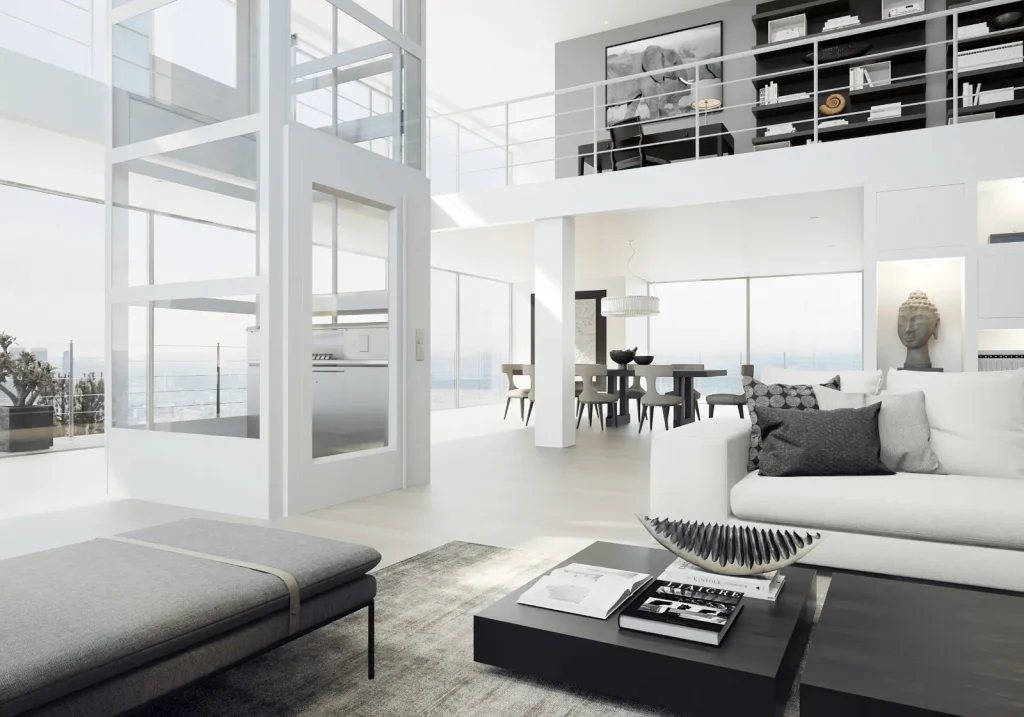
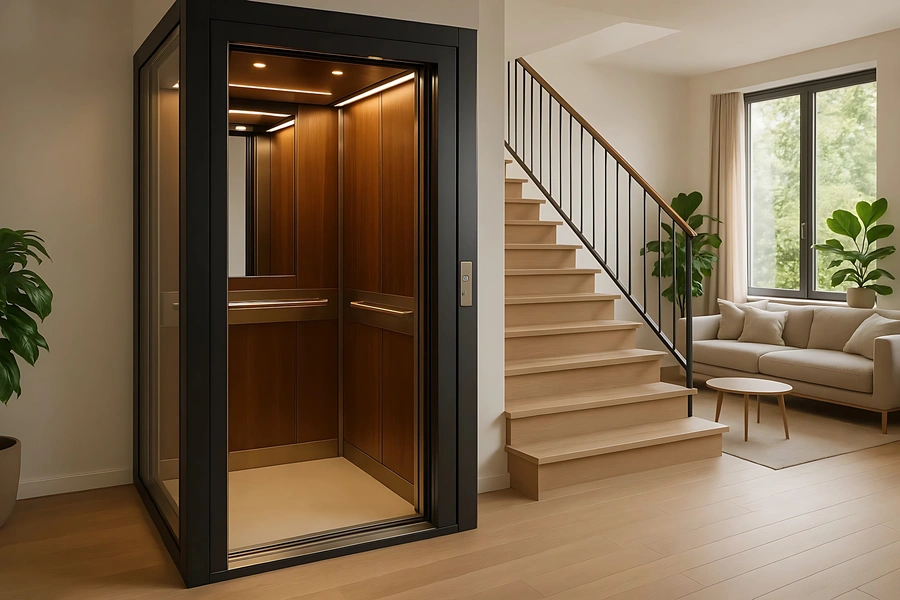
We supply several types of home lift, from compact through-floor lifts for one person to larger platform lifts that take a wheelchair and a companion. In an older stone house, the choice often comes down to which lift needs the least structural work. We’ll explain the options that suit your property at the survey.
Listed Buildings and Conservation Areas
Clitheroe, Whalley, Downham, Waddington and several other villages have conservation areas, and the valley has plenty of listed farmhouses and cottages. Fitting a lift inside a listed building normally needs listed building consent, even when nothing changes on the outside. We’ll suggest the position and type of lift that disturbs the least original fabric, and give you the drawings and specification your planning officer will ask for.
Getting the Lift Into the House
Narrow lanes, farm tracks and cottage doorways all need thinking about before delivery day. Most home lifts arrive in sections and are assembled where they will stand, so they can usually be carried through a standard doorway. We check access at the survey, including where a van can park and how far the parts need to be carried, so there are no surprises when the installation team turns up.
Planning for Later Life
A lot of people move to the Ribble Valley to retire, and many of the homes that attract them have steep stairs and bedrooms on the upper floor. If you’re renovating now, it costs far less to allow for a lift later than to retrofit one. That can be as simple as lining up two cupboards, one above the other, so they can be opened into a lift shaft when it’s needed.
Grants and Funding in the Ribble Valley
Disabled Facilities Grants are handled by Ribble Valley Borough Council, but the first step is an occupational therapy assessment arranged through Lancashire County Council. The council also offers a discretionary Ribble Valley Adaptation grant of up to £10,000, which can help where the cost goes over the mandatory grant. Don’t start any work before the grant is approved, as it can’t be paid retrospectively. If the lift is for someone with a long-term disability, it should also be zero-rated for VAT.
Home Lift Installation Across the Ribble Valley
We cover Clitheroe, Whalley, Longridge, Read, Sabden, Billington, Chatburn, Waddington, Downham, Ribchester, Mellor, Wilpshire and the villages up into the Forest of Bowland.
Already have a lift? We also service and repair lifts in Clitheroe.
Ready to talk about a home lift? Call 01254 775187 or send us a message and we’ll arrange a free survey at a time that suits you.

Frequently Asked questions
Can a home lift be fitted in a house with thick stone walls?
Yes. The lift travels through the floor, not the walls, so wall thickness rarely matters. Where the lift is fixed to a wall for support, solid stone gives a good fixing.
Does a home lift need a special electricity supply?
Usually not. Most domestic lifts run from a normal single-phase supply with a dedicated fused spur, which your electrician can fit before we arrive.
Can a home lift be fitted on an uneven or old floor?
Yes, but the floor where the lift stands needs to be level and strong enough for the load. On older stone or flagged floors, we may need a small concrete base laid first.
Can a home lift serve a split-level house?
Often, yes. Some lifts can have doors on different sides at each stop, which helps where the floors don’t line up neatly.
Can I get a home lift without a grant?
Yes. Plenty of people pay for a home lift privately. The grant route is worth looking at, but it can take months, so some decide to go ahead without waiting.