
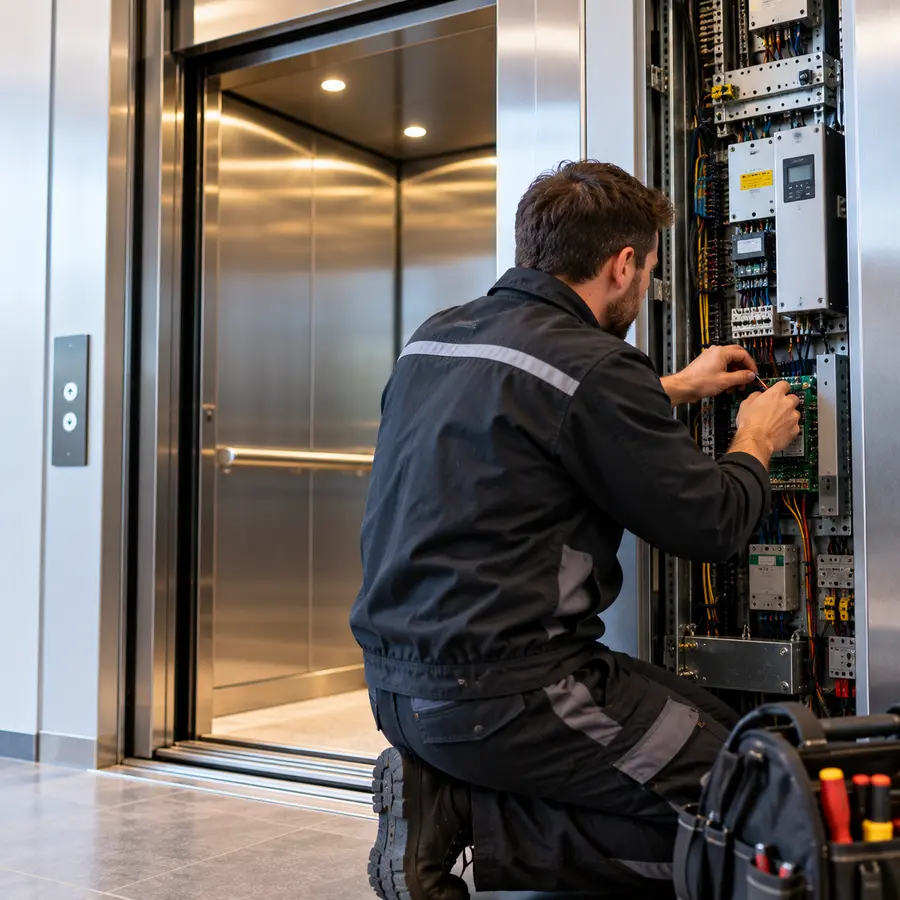
One lift breakdown does not necessarily indicate a serious problem. Components wear, faults occur and even a well-maintained lift can occasionally need repair.
Repeated breakdowns are different.
If a lift is being returned to service only to fail again a few weeks later, it is worth looking beyond the latest fault. Several different problems can produce the same pattern of unreliable operation, and repeatedly fixing the immediate symptom may not address the underlying cause.
The same component keeps failing
A recurring fault involving the same component is an obvious place to start, but the failed part may not always be the root cause.
If a component is being replaced unusually often, something else within the system may be contributing to its failure. Engineers may need to consider the surrounding equipment, operating conditions and fault history rather than treating each breakdown as an isolated event.
Good repair records are particularly useful here because they make patterns easier to identify.
Door problems are causing repeated stoppages
Lift doors carry out a large number of movements every day and are a common source of operational problems.
Door operators, rollers, tracks, sensors, locks and other components can all affect whether the doors open and close correctly. Dirt or physical damage can also interfere with operation.
In a heavily used building, door equipment may experience considerably more wear than other parts of the lift.
Repeated door faults therefore need proper investigation. Resetting the lift may restore operation temporarily, but it does not resolve worn or damaged equipment.
The lift is working harder than it used to
The demands placed on a lift can change considerably during its lifetime.
A building may have more occupants, a change of use or longer operating hours than when the lift was originally installed. Equipment that was once suitable may now be completing substantially more journeys each day.
Heavy usage does not automatically mean a lift will be unreliable, but maintenance arrangements need to reflect how the equipment is actually being used. Appropriate lift servicing should take account of the type of lift, its condition and the demands placed on it.
Ageing components are creating several different faults
Older lifts do not always develop one obvious failure. Reliability can decline gradually as several components reach the later stages of their working lives.
A repair may solve one problem only for a different ageing component to cause the next breakdown.
This can create a cycle in which individual lift repairs remain technically successful, but the lift as a whole continues to be unreliable.
At this point, looking at repair frequency and expenditure over a longer period becomes more useful than assessing the cost of the latest call-out alone.
Parts are obsolete or difficult to source
Obsolescence does not necessarily mean a lift needs immediate replacement, but it can make ongoing repairs more difficult.
Older control systems, drives and other components may no longer be manufactured. Alternatives may sometimes be available, but sourcing compatible parts can take longer and increase the amount of time the lift remains out of service.
The problem becomes more significant when several important systems are reaching obsolescence at the same time.
An intermittent fault has not been captured
Some of the most frustrating lift problems are those that disappear before an engineer arrives.
An intermittent electrical, control or sensor fault may stop the lift under particular circumstances but leave little obvious evidence once the system is reset.
That makes an accurate fault history important. When the lift stopped, what it was doing immediately beforehand, which floor it was on and whether the same circumstances were present during previous failures can all help narrow down the cause.
Repeatedly resetting an intermittent fault without establishing why it occurs can allow the same breakdown to return.
The operating environment is affecting the equipment
Not every recurring fault originates solely within the lift.
Temperature, moisture, dust, building works and other environmental conditions can affect lift equipment. Problems may also begin after changes elsewhere in the property if those changes alter the conditions in which the lift operates.
When faults begin suddenly or repeatedly affect particular components, it is worth considering what else has changed around the installation.
Previous repairs have dealt with symptoms rather than the wider problem
There are situations where an immediate repair is exactly what is needed. A failed component is identified, replaced and the lift returns to normal operation.
Repeated breakdowns call for a wider view.
If several call-outs relate to the same system, reviewing the history together may reveal a pattern that is not obvious when each visit is considered separately.
This is where maintenance reports, fault codes and previous repair records become particularly valuable.
When repeated repairs point towards modernisation
A lift does not need to be replaced simply because it has suffered several breakdowns.
However, there comes a point where repeatedly repairing ageing equipment may provide poor value, particularly if reliability remains unchanged.
Where the main structure and other parts of the installation remain suitable, lift modernisation can allow problematic or obsolete systems to be upgraded without replacing the entire lift.
The decision should be based on the condition of the installation, fault history, availability of parts, cost of continued repairs and the needs of the building rather than the age of the lift alone.
Look at the pattern, not just the latest breakdown
When a lift keeps failing, the most useful question is not simply what caused today’s breakdown. It is whether today’s problem forms part of a wider pattern.
Reviewing previous faults, repairs, component condition, usage and parts availability can show whether the lift has an isolated issue or a broader reliability problem.
That distinction matters. Fixing a specific fault may be all that is required, but where breakdowns continue, identifying the underlying reason is the best way to stop the same cycle repeating.