
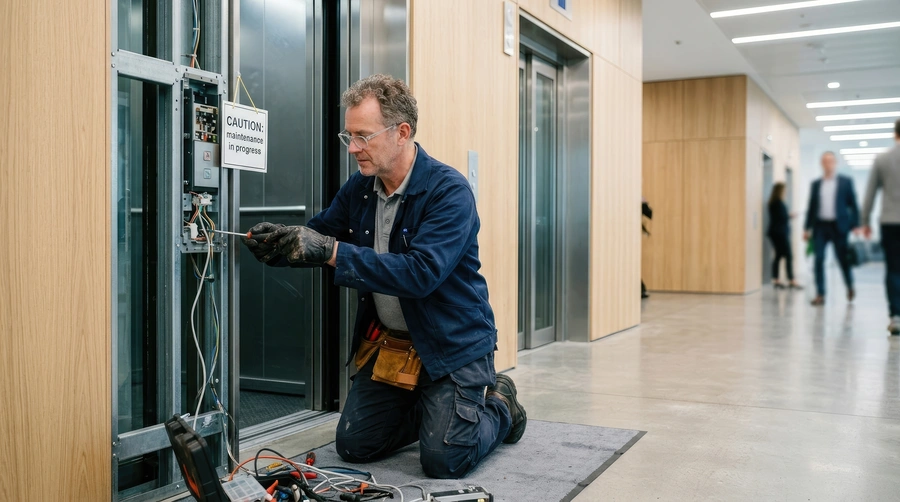
For many building owners and facilities managers, lift maintenance is something that quietly happens in the background. As long as the lift is working, it can be tempting to postpone servicing or put off repairs to keep costs down.
However, delaying maintenance often has the opposite effect. Small faults can escalate, repair costs can increase, and the lift may become unavailable when it is needed most. Over time, the financial impact of delayed maintenance can far outweigh the cost of regular servicing.
Small faults rarely stay small
Lifts are made up of many moving mechanical and electrical components that wear down each time the lift is used. While some parts naturally require adjustment or replacement over time, regular maintenance helps identify these issues before they affect the lift’s performance.
A door that occasionally hesitates, an unusual noise or a lift that feels slightly less responsive may not seem urgent. Left unchecked, these early warning signs can develop into faults that require more extensive repairs or replacement parts.
Addressing smaller issues early is often quicker, less disruptive and more cost-effective than waiting for a complete failure.
Unexpected breakdowns can disrupt the whole building
When a commercial lift is unexpectedly taken out of service, the impact is often felt throughout the building.
Employees may struggle to move equipment between floors, deliveries can be delayed, and visitors may experience inconvenience. In residential buildings, a lift breakdown can create significant difficulties for residents, particularly those who rely on step-free access.
For businesses that welcome customers, unreliable lift performance can also affect the overall impression of the building and the experience visitors have.
Regular maintenance reduces the likelihood of unexpected breakdowns by identifying developing faults before they become more serious.
Emergency repairs usually cost more
Planned maintenance allows work to be scheduled before a problem becomes critical. Emergency repairs are different.
When a lift fails unexpectedly, there is often pressure to restore service as quickly as possible. This can involve emergency call-outs, sourcing replacement parts at short notice and carrying out repairs outside normal working hours.
Not every fault can be prevented, but properly maintaining the lift year-round can significantly reduce the risk of costly emergency work.
Delayed maintenance can shorten the life of a lift
Commercial lifts represent a significant investment, so it makes sense to protect them for as long as possible.
When worn components are not replaced at the right time, they can place additional strain on other parts of the lift. What begins as a relatively minor issue may gradually affect the performance of the wider system.
Routine servicing helps keep components working as intended, reducing unnecessary wear and supporting the lift’s long-term reliability.
Reliability matters to everyone using the building
People expect a lift to work when they need it. Whether it is an office, an apartment building, a healthcare facility, or retail premises, reliable lift operation helps the building function as intended.
Repeated faults can cause frustration for staff, visitors, residents and customers. They can also create additional work for facilities teams who need to respond to complaints, arrange repairs and manage disruption while the lift is unavailable.
Keeping maintenance up to date helps provide greater confidence that the lift will continue operating reliably throughout the year.
Compliance should not be overlooked
Commercial lift owners have responsibilities when it comes to keeping lift equipment safe and properly maintained.
Routine servicing supports the safe operation of the lift and can help identify issues that may require attention before they develop further. It also works alongside statutory inspections, helping ensure the lift continues to operate as expected between examinations.
Maintaining accurate maintenance records and promptly addressing reported faults demonstrate a proactive approach to managing lift safety.
Planned maintenance helps control costs
Some building owners see maintenance as an expense that can be postponed if budgets are tight. In reality, planned servicing often makes maintenance costs easier to manage.
Regular inspections allow engineers to identify worn parts before they fail, making repairs more predictable and helping avoid larger, unexpected costs later.
Over the lifetime of a commercial lift, a planned maintenance programme can often prove far more economical than relying on reactive repairs.
Knowing when maintenance is no longer enough
There comes a point where increasing repair costs may indicate that the lift needs more than routine maintenance.
If breakdowns are becoming more frequent, parts are becoming difficult to obtain or repair costs continue to rise, it may be worth considering whether lift modernisation or replacement would provide better long-term value.
Reviewing the lift’s condition with an experienced specialist can help building owners make informed decisions before costs continue to escalate.
Keeping maintenance on schedule
Delaying lift maintenance may appear to save money in the short term, but it often leads to higher repair costs, increased disruption and greater pressure when faults eventually occur.
A planned approach allows potential issues to be identified early, helping to maintain reliable lift performance while avoiding many of the costs associated with reactive repairs. For building owners and facilities managers, staying ahead of maintenance is usually the simplest way to protect both the lift and the people who rely on it every day.